The longer story.
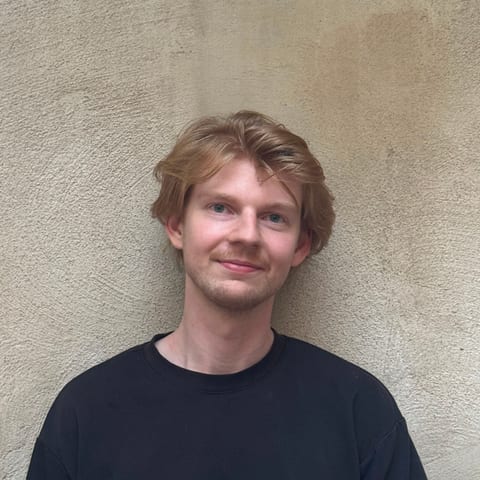
I grew up next to the Baltic Sea, in the flat, windy north of Germany. At fifteen I hosted Minecraft and TeamSpeak servers for my friends and wrote the plugins they needed myself, my first real code. A few years later I got into sneaker reselling, built a bot, and noticed that selling the bot to other resellers paid better than chasing the shoes myself. That was the start of my journey as a founder.
Background
I studied public management because I wanted to fix government from the inside, and I went into the public sector to do exactly that: project lead for digital government services, at the German Federal Ministry of the Interior and at the Hanseatic City of Lübeck. Next to the full-time job I studied computer science. The work taught me two things. A well-built digital service does a lot of good: a form that works on a phone, a process that takes minutes instead of weeks. And technology rarely reaches the people who need it most, the ones without the time or the language to fight through a bad system.
My first startup came straight out of that job. Lübeck’s city press office wanted to publish everything on their website in easy language too, but by hand that was an absurd amount of work. I told them I’d sit down with two friends and find a better way with AI. We built a website plugin that translates and hosts whole websites in easy language, thousands of subpages at a time. That became Participaite, built while I was still a civil servant.
Now
Then AI started to accelerate, and I wanted to work on it at the speed it moves. That speed doesn’t exist inside an administration. So I quit a tenured civil service job, the kind you’re meant to keep for life, and became a founder full time.
In mid 2025 we built our first MCP server, a flight search. The moment Claude found and booked our next flights for us, we knew this was the future. Yavio came out of that: we build and run MCP servers under a brand’s own name, connected to its systems, so it can sell inside ChatGPT and Claude. Watching companies treat AI agents as a new kind of customer raised the next question: what would a shop look like if it never had a human visitor at all? Commerce for Agents is our attempt to find out, starting with energy contracts in Germany. It’s as much research as it is a company.
A good product doesn’t feel like a product to the person using it. Good design feels like it was always there, and it hurts the moment someone takes it away. That’s what I’m building.